Showing posts with label chelios. Show all posts

Wednesday, June 7, 2023

Puck Soup: Are the Panthers done?

On this week's episode of the Puck Soup podcast:
- We react to the first two games of the final
- Matt Tkachuk gets a whole lot of penalties
- The goalies have been the story
- Thoughts on the Jack Eichel hit
- A busy week for Kyle Dubas, Mike Babcock and Greg Gronin
- A big three-team trade
- Plus Cole Caufield, Chris Chelios and more...

>> Listen on The Athletic
>> Subscribe on iTunes
>> Listen on Spotify

>> Get weekly mailbags and special bonus episodes by supporting Puck Soup on Patreon for $5.


Thursday, January 5, 2023

The Athletic Hockey Show: Rev up the tanks

On this week's episode of The Athletic Hockey Show:
- Connor Bedard is unstoppable, and soon the tank wars will be too
- Could the Canucks join the race?
- I remember a once-common type of trade that today's GM are too scared to try
- Leetch vs. Chelios, who do you want at their peak?
- I get to tell my Craig Berube jersey story again
- Plus WJC, outdoor games, NHL99 and more...

The Athletic Hockey Show runs most days of the week during the season, with Ian and I hosting every Thursday. There are two versions of each episode available:
- An ad-free version for subscribers that you can find here
- An ad-supported version you can get for free wherever you normally find your podcasts (like Apple or Spotify)


Wednesday, July 14, 2021

The Athletic Hockey Show: Let's get Wild

On this week's episode of The Athletic Hockey Show:
- The Wild buy out Zach Parise and Ryan Suter and we're confused
- How many 10-year+ contracts actually worked?
- Remember that bonkers Chris Chelios threat to Gary Bettman
- Thoughts on the Senators' interesting new front office
- More on the Duncan Keith trade
- Jesse Granger on next year's Cup odds
- Cinderella teams, the days of coach/GMs, remembering the 1994 Mike Keenaan fiasco and more...

The Athletic Hockey Show runs most days of the week during the season, with Ian and I hosting every Thursday. There are two versions of each episode available:
- An ad-free version for subscribers that you can find here
- An ad-supported version you can get for free wherever you normally find your podcasts (like Apple or Spotify)


Friday, September 27, 2019

Playing ‘what if?’ on the 25th anniversary of the 1994 lockout that changed the NHL

The hockey world has spent the last few weeks on a familiar topic for NHL fans: work stoppages. And for once, the news was mostly positive, as the NHL and NHLPA have decided not to end the current CBA early. That means we won’t have a lockout in 2020, although one could still happen two years later when the CBA expires as scheduled.

A 2022 work stoppage, if it came to that, would be the fourth of the Gary Bettman era. Just about all of us still have fresh memories of the 2012 lockout, which wiped out half a season. And we all know the story of the 2004 version, the most divisive and protracted in North American pro sports history. That lockout saw the owners win their ultimate goal of a hard salary cap while becoming the only league to cancel an entire season in the process.

But while the impact of those fights, both good and bad, are still being felt around the league to this day, the original NHL lockout seems to have largely been forgotten. That one came way back in 1994 when Bettman was in just the second year of his new job. It dragged into January 1995 and ultimately cost the league half a season. And in hindsight, it didn’t achieve all that much, with an eventual agreement that mostly retained the status quo. At the time, that deal was seen as a win for the owners, but it quickly became apparent that they hadn’t gained enough. As trilogies go, Part 1 of the NHL’s lockout series didn’t pack in much in the way of drama or major plot twists, but it did introduce the important themes and characters while setting the stage for the bigger productions come.

Next week will mark the 25th anniversary of the official start of the NHL’s first lockout. To celebrate, let’s look back on what happened a quarter-century ago, and how the league might look if things had played out differently. Here are five “what if” scenarios to ponder.

What if: The owners had held firm for a salary cap?

Let’s start with the big one. The owners headed into the 1994 negotiations looking to remake the league’s economic system. Bettman was hesitant to use the words “salary cap,” but he’d been hired two years earlier at least in part due to his role in helping the NBA create a cap system. It wasn’t hard to read the writing on the wall.

But any talk of a hard cap seemed to fade early in the negotiations, with the two sides instead focusing on a payroll tax. The league’s reported proposal was punitive enough – more than a dollar taxed for every dollar spent over a set limit – that Bob Goodenow and the NHLPA viewed it as all but a de facto hard cap, a scenario they weren’t interested in accepting. So the players sat back and waited for the owners to fold. Eventually, they did.

That came as a surprise to Bettman, who’d gone into the battle with assurances from his owners that they had his back and were prepared to strap in for a long fight. He’d certainly acted like a guy who was willing to play the villain, firing the first shot in August by unilaterally withdrawing some player benefits. The animosity between the sides got so bad that at one point, Chris Chelios even appeared to threaten Bettman’s safety, a moment for which he later apologized.

As the lockout dragged on and games were canceled for the first time in league history, the owners continued to put on a united front, even authorizing Bettman to cancel the entire season. But behind the scenes, that solidarity was crumbling. (For a more in-depth look at the politics of the 1994 lockout, I highly recommend “The Instigator,” Jonathon Gatehouse’s must-read look at Bettman’s tenure.) It eventually became clear that Goodenow and the players weren’t going to cave, and the league’s richer teams began to wonder if losing an entire season was really worth it. The players had offered a handful of concessions, including a rookie salary cap. With the deadline to cancel the season looming, the owners decided that those small wins were enough.

What if they hadn’t? What if the owners had remained united behind Bettman? Or maybe more realistically, what if Bettman had done a better job of making sure that his owners had no choice? The commissioner learned a tough lesson from the 1994 lockout, and made sure that he went into the 2004 version with more power and less vulnerability to his owners getting cold feet. What would have happened if he’d been able to get his charges to hold the line in 1994 instead?

>> Read the full post at The Athletic

(Want to read this post on The Athletic for free? Sign up for a free seven-day trial.)


Monday, June 3, 2019

This is so pointless: A brief history of players going oh-for-the-postseason

This post is going to be completely pointless.

Wait, that didn’t come out right. I don’t mean that this post won’t have any reason to exist. I mean, who would write something like that? (Realizes everyone is staring at him.) OK, yes, I may have had a few of those in my day. But this isn’t necessarily one of them.

No, I mean that this is going to be pointless in the other way – as in, it will have zero points. Today, we’re going to try to assemble an all-time roster of playoff performers who didn’t record a single point in a given postseason.

That’s not an easy thing to do, especially if you’re a decent player. Even if your team goes out early, you’d think that you’d get in on at least one goal along the way. But as we’ll see, there are some surprisingly big names on the list. And a few other players have some interesting stories to tell.

Nobody from this year’s postseason made the cut, although a few almost did. Sidney Crosby didn’t get a point until his team’s final game. Neither did Nikita Kucherov. Of course, their runs ended early. But some lasted longer, like Carl Gunnarsson. He made it all the way to Game 2 of the final before finally recording a point. He actually had two that night. I can’t remember if any of them turned out to important.

The point is … well, sometimes there is no point. And that’s OK. Don’t worry, Viktor Arvidsson and Nikolaj Ehlers. Fear not, Nikita Zadorov, Micheal Haley, Trevor van Riemsdyk or Frederik Gauthier. You may have been pointless, but as you’re about to see, you’re in decent company.

First line

C Phil Esposito (1964 and 1967)

We’ll start off with a Hall-of-Famer who qualifies for our list in two seasons, one of which helped change NHL history. Esposito’s playoff debut came in 1964 when he was a 22-year-old rookie. He was only a bit player with the Hawks back then and had only managed three goals in part-time duty during the regular season, so his pointless performance in four games during a semifinal loss to the Red Wings wasn’t especially newsworthy.

But three years later, Esposito was coming off a 61-point season that left him tied for seventh in the league scoring race. With a lineup that also featured Bobby Hull and Stan Mikita in their primes, the Hawks ran away with top spot in the NHL, racking up 94 points over the 70-game schedule while outscoring the next best offensive team by 52 goals. They went into the playoffs as heavy favorites, before being stunned by the Maple Leafs in six games. Esposito was held off the board again, cementing a reputation as a player who couldn’t be counted on when it mattered.

Convinced they needed a change in direction, the Hawks traded him to the Bruins in an offseason deal that stands as one of the most important trades in NHL history. Esposito developed into one of the greatest goal-scorers the league had ever seen, helping the Bruins win two Cups. And it may have never happened if he’d just managed a point or two in that 1967 playoff loss.

RW Mike Gartner (1989) and LW Bryan Trottier (1988)

We’ll give Esposito a pair of Hall-of-Famers on his wings, even if we have to ask Trottier to play out of position to do it. Gartner never won a Cup and occasionally fought a reputation as a guy who was a better regular season star than a playoff performer, as evidenced by the 1994 Rangers shipping him out at the deadline. He did have some decent postseasons, including four where he hit double-digit points. But his lone spring as a North Star saw him go pointless after a massive deadline deal and he’d be gone less than a year later.

As for Trottier, he won six Cups, led the postseason scoring race twice, won a Conn Smythe and ranks among the highest scoring playoff players ever. But he was blanked in a first-round loss in 1988 despite an 82-point regular season, finishing behind high-scoring Islander teammates like Gerald Diduck and Ken Leiter.

>> Read the full post at The Athletic

(Want to read this post on The Athletic for free? Sign up for a free seven-day trial.)


Friday, April 5, 2019

Grab Bag: Lots left to play for

In the Friday Grab Bag:
- The playoff races are mostly settled, but there's still lots left to play for... kind of.
- A request for people who direct NHL telecasts
- The week's three comedy stars
- An obscure player who's really just an excuse to tell the story of the craziest season finale in NHL history
- And a YouTube look back at the craziest goalie pull of all time

>> Read the full post at The Athletic

(Want to read this post on The Athletic for free? Sign up for a free seven-day trial.)


Monday, July 16, 2018

Six teams that were forced into trading a star, but still won the deal

We’re still waiting on an Erik Karlsson deal. We’re still told that the Lightning and Stars are the frontrunners, but the rumour mill has largely gone cold and a deal no longer seems imminent. Some reports now suggest that Pierre Dorion could even end up holding on to Karlsson until training camp, if not beyond.

As far as the Senators and their fans go, no news may feel like good news. After all, conventional wisdom says that this is a trade they just can’t win.

For one, there’s the old adage about the team that gets the best player winning the deal, and that will be Karlsson. But more importantly, it’s always been clear that the Senators are dealing from a position of weakness. They don’t want to trade their captain, but they might have no choice. And as the old saying goes, when the league knows you’re drowning, other teams start throwing anchors instead of lifejackets.

We’ve seen it plenty of times in NHL history, and the team that’s forced into dealing a star typically gets taken to the cleaners. Think of Montreal trading Patrick Roy to Colorado, or the Oilers sending Mark Messier to New York, or the Flames all but giving Doug Gilmour to Toronto. Those ended up being some of the most lopsided deals in NHL history, but the teams making them didn’t have much choice. That’s the sort of situation the Senators may be headed towards, and it always ends in misery.

Well, almost always. Because while it’s rare, there have been some cases in NHL history where a team was forced into trading away a superstar and actually ended up doing well on the deal. So today, let’s offer up some optimism for Ottawa fans by looking back at six times that a team was backed into a corner and still found a way to come out even, or even ahead – and what the Senators could learn from them.

Eric Lindros to Philadelphia, 1992

The setup: We’ll start with the most obvious example, and a blockbuster that reminds us that sometimes the best player in a trade doesn’t end up being who you might think.

When the Nordiques drafted Lindros in 1991, they thought they’d landed their franchise player. Lindros was the most hyped prospect to enter the league since Mario Lemieux, and was viewed as a sure-thing superstar. But he didn’t want to play in Quebec and went back to junior rather than sign a contract with the Nordiques. The team tried to play hardball, but after a full year had passed it became evident they’d have to make a trade.

The trade: This gets a little complicated, since the Nordiques actually ended up trading Lindros twice. They agreed to separate deals with both the Rangers and the Flyers, and it took a hearing in front of an NHL arbitrator to figure out which deal would stand. After five days and 11 witnesses, the ruling came down: Lindros was headed to Philadelphia, in exchange for Ron Hextall, Steve Duchesne, Kerry Huffman, Mike Ricci, the rights to Peter Forsberg, two first-round picks and cash.

The result: While he wasn’t the next Lemieux, Lindros came reasonably close to living up to the hype. He won a Hart Trophy in his third season, and eventually made the Hall of Fame despite an injury-riddled career. But the Nordiques may have got the best player in the deal in Forsberg, and the rest of the haul helped them make a quick transition from laughingstock to Cup contender.

(For what it’s worth, the Flyers would end up being backed into an unwanted trade of their own in 2001, when Lindros sat out an entire season to force his way out of town. That deal ended up being a bust.)

The lesson: With all due respect to Karlsson, it’s hard to imagine a player ever having as much trade value as the 19-year-old Lindros did, so the Sens won’t be getting anywhere close to that sort of windfall. But they do seem to be following one key page from the Nordiques’ playbook by working to create a bidding war between two teams. If Dorion can maneuver the Stars and Lightning into an auction, he may be able to extract enough value to make the move work out. Just, uh, don’t pull the trigger on both deals at the same time.

>> Read the full post at Sportsnet


Wednesday, July 11, 2018

What happens when one team has two elite defensemen?

The Erik Karlsson watch continues. After rumours swirled all weekend that a deal to send Karlsson to Tampa was imminent, we’ve made it into the week without a trade. The Lightning still seem like the frontrunner, but for now, nothing is official.

That’s good news for everyone who isn’t a Lightning fan, because it means there’s still a chance that the two-time Norris winner won’t end up playing on the same team as this year’s recipient – Victor Hedman — and maybe even on the same pairing. That’s vaguely terrifying for the rest of the league, since we’re told that defence wins championships and the Lightning would have two of the very best in the league.

That kind of star power sharing the same blue line is rare, but not unheard of. So today, let’s run through some of the times over the past 30 years or so that one team could run out a pair of Hall of Fame defencemen. Note that we’re talking about a pair here, not necessarily a pairing – in most cases, these players weren’t used on the same unit, and we don’t know whether Karlsson and Hedman would be. But even if they’re deployed separately, having two Norris-caliber defencemen gives a coach all sorts of opportunity to dominate matchups.

It also virtually guarantees a Stanley Cup… most of the time. As we’ll see, there are no sure things in the NHL, although having an all-star blue line comes awfully close.

Chris Pronger and Scott Niedermayer, Anaheim Ducks

There’s a good chance that when you saw the subject for this post, this is the first pair that came to mind. They land right in that sweet spot where they’re recent enough that everyone remembers them, but long enough ago that we can start to build a mythology around them.

In the case of the Ducks, the mythology goes something like this: Anaheim was a good team coming out of the lockout, and they became a very good one when they signed Niedermayer as a free agent in 2005. But it was the acquisition of Pronger in 2006, thanks to some aggressive maneuvering by GM Brian Burke, that gave Anaheim one of the greatest pair of blueliners in modern NHL history, and they rolled to the Stanley Cup the very next year.

Most of that mythology is pretty much true, although it leaves out a few details, like Pronger forcing his way out of Edmonton and Niedermayer choosing the Ducks at least partly because he could play with his brother.

Those minor details aside, it’s hard to deny how overpowering the pair were. Randy Carlyle often used them on the same unit; other times he’d split them up and basically play the entire game with a Norris winner on the ice. During Anaheim’s Cup run, both players averaged roughly 30 minutes a game, miles ahead of any other Ducks.

When you think of a potential Karlsson/Hedman combo, this is the scenario you’re dreaming of if you’re a Lightning fan and dreading if you’re anyone else. But the story ending with a Cup parade isn’t quite inevitable, as Pronger himself can remind us…

>> Read the full post at Sportsnet


Tuesday, January 2, 2018

Ten times an elite defenceman was traded in his prime

If you’re the sort of fan who enjoys a good trade rumour, these days it’s all about the blue line.

That’s not all that unusual – in today’s NHL, it always feels like just about everyone needs help on defence. But for a change, we’re not just talking about depth pieces or short-term rentals. Instead, it’s some of the biggest names in the sport who are rumoured to potentially be available. In Ottawa, there’s been talk that Erik Karlsson could move at some point before he hits free agency in 2019. Arizona is facing a similar dilemma with Oliver Ekman-Larsson. And the slumping Penguins are now reported to at least be considering a move involving Kris Letang.

That’s not to say that any of those trades will happen, of course. But it’s rare to even see names of this magnitude show up in discussions at all. After all, as we’re so often told, nobody trades elite defencemen in their prime in this league.

Or do they? It turns out, trades involving top defencemen have been more common than you might think.

So today, let’s crack open the history books for a look at some of the times in NHL history that an elite defenceman was traded in his prime. We’re looking for guys who were established stars, which we’ll define as already having at least one post-season all-star pick or multiple top-five Norris finishes in their career. We also want players who were still relatively young, which we’ll say means they were 32 or younger. That rules out guys who were traded later in their career, like Brian Leetch and Ray Bourque, as well as some who blossomed into top-tier stars after they were traded, like Ryan McDonagh and Brent Burns. But it still leaves us with a surprisingly long list of candidates.

Here are 10 times in the last 30 years than an elite defenceman was traded in his prime, and what those deals might teach us about what to expect from today’s rumoured moves.

Paul Coffey

The trade: We have plenty of trades to choose from with Coffey, who was traded seven times. We’ll go with his first, the 1987 deal that saw the Oilers send him along with Dave Hunter and Wayne Van Dorp to Pittsburgh for Craig Simpson, Dave Hannan, Moe Mantha and prospect Chris Joseph.

The reason: Coffey was a two-time Norris winner at the age of 26 and had been a key part of three Edmonton championships, but by the start of the 1987-88 season he was holding out in a contract dispute. The Oilers made him wait until November as they worked to get a top asset back; they found one in Simpson, a 21-year-old who’d been the first-overall pick two years earlier.

The result: This trade allowed Simpson to become the first player to ever score 50 goals in a season split between two teams. But over time, Coffey had the greater impact, including three 90-point seasons, and he helped the Penguins win their first Stanley Cup.

The lesson: Sometimes, your hand is forced and you just have to bite the bullet and do the best you can. Under the circumstances, the Oilers did OK on this deal.

Rob Blake

The trade: In February 2001, the Kings sent Blake and Steve Reinprecht to Colorado for Adam Deadmarsh, Aaron Miller, a player to be named later and two first-round picks.

The reason: Blake was a pending UFA and wanted big money, so Kings ownership decided to move him even though the team was contending for a playoff spot.

The result: The deal worked out great for the Avs, who won the Cup that year and then re-signed Blake for five more seasons. The Kings didn’t get much from the deal – Deadmarsh had his career cut short by injuries and the picks turned into Dave Steckel and Brian Boyle – but did get Blake back for a few years at the end of his career.

The lesson: When a Norris-calibre player becomes available, sometimes going all-in pays off. The Avalanche had already traded for Bourque the year before, so they were firmly in all-or-nothing mode. They ended up with “all”, and have a banner to show for it. Remember that when contenders start to hem and haw about the asking price for Karlsson or Ekman-Larsson being too high.

>> Read the full post at Sportsnet


Wednesday, June 7, 2017

A look back at five playoff rookie double-dippers

Jake Guentzel is having the sort of rookie playoff year that every NHL player dreams of. To play well under the pressure of the post-season as an NHL rookie is rare, and for most players it's a once-in-a-lifetime experience.

Or, in the case of Matt Murray, twice in a lifetime.

Yes, Murray is technically still a rookie, even though he's on the verge of winning his second Stanley Cup as a starting goaltender. That's because he only played a handful of games during the 2015-16 regular season, meaning he didn't lose his rookie eligibility. He'll probably be named the goalie on this year's all-rookie team, and he might collect the award with two Cup rings in his pocket.

Murray is an extreme case, but it's actually not all that rare for NHL players to get multiple playoff runs when they're still considered rookies. It happened to current players like Torey Krug, Chris Kreider, Logan Couture and Tyler Toffoli. One of the Predators trying to prevent Murray from repeating as champion, P.K. Subban, pulled it off a few years ago.

And so did some of the best players in NHL history. So today, let's look back at five Hall of Famers who played well in the post-season as a rookie, and enjoyed it so much they did it again.
 

Ken Dryden

Before Murray came along, Dryden was the go-to case for establishing playoff dominance right out of the gate. He'd only played in six regular season games when he took over as Montreal's starter for the 1971 playoffs, but he was fantastic, posting a very good (for the time) 3.00 goals-against average while leading the Canadiens to the Stanley Cup. For his performance, Dryden earned the Conn Smythe as playoff MVP.

He continued his dominance into the following season, finishing second to Bobby Orr in the Hart Trophy race and earning the Calder Trophy as rookie of the year. But his second playoff run wasn't quite as successful as his first. While he posted an even better GAA of 2.83, Dryden and the Canadiens had their reign ended by the Rangers in six games.

That loss ended up being a minor detour for Dryden on the way to six Stanley Cup rings, making him one of only two goaltenders to ever hit that mark.

>> Read the full post at The Hockey News


Tuesday, February 21, 2017

Assembling history's all-deadline team

We’re down to eight days until the deadline, and so far the market has been… a little slow. Just a bit sluggish. Did you bet the under? You’re probably going to win.

Maybe GMs around the league are just saving up for the big finale. Or maybe they’re all big wimpy babies. But there’s another possible explanation. Maybe they just need a little extra motivation.

Let’s provide some. Today, let’s put together a full roster of the best trade deadline–week acquisitions in league history. We’re only looking at what each player did with his new team here, and we’re not counting draft picks that turned into stars (we covered a few of those last week). But that still gives us plenty of big names to choose from. Consider it a reminder that every now and then, a smart and/or lucky GM can land a major difference-maker with the right deadline move.

Will this year’s deadline add anyone to the team? Time will tell. But for now, let’s meet our roster.

FIRST LINE

Ron Francis, Pittsburgh Penguins (March 4, 1991)

The 1990–91 Penguins were already stacked, boasting future Hall of Famers like Mario Lemieux, Paul Coffey, Larry Murphy, Joe Mullen and Bryan Trottier, not to mention a team-leading 113-point season from Mark Recchi and a rookie with funny hair named Jaromir Jagr. But with his team hovering just two games over .500 and coming off a four-game losing streak, GM Craig Patrick apparently decided that they needed something more.

And so, a week before the 1991 deadline, Patrick swung one of the biggest trades of the era, sending John Cullen, Jeff Parker and Zarley Zalapski to Hartford for Francis, Ulf Samuelsson and Grant Jennings. It was, to put it mildly, a questionable move for the Whalers. Francis was the franchise, and seeing him dealt away devastated the fanbase.

Francis would go on to have some of the best years of his career in Pittsburgh, and his arrival was a key to the team winning back-to-back Cups.

Brett Hull, St. Louis Blues (March 7, 1988)

The trade that sent Brett Hull from Calgary to St. Louis might hold the distinction of being the most lopsided trade in sports history that neither team is all that unhappy with.

From the Blues' side, it was a heist. Hull would go on to record three straight 70-plus goal seasons and win an MVP in St. Louis, and they got him and Steve Bozek for a pair of solid-but-unspectacular veterans in Rick Wamsley and Rob Ramage. It's the best trade in franchise history, and it's not close.

But while the Flames got robbed in terms of long-term value, they made the deal with a purpose: Load up on experience to win a Stanley Cup. In 1989, they did, taking home the franchise's first and only championship. Would you trade that banner to get Hull back? Probably not, but Hull still gets a spot on our first line.

Markus Naslund, Vancouver Canucks (March 20, 1996)

Naslund reunites with Francis on our top line. The two were teammates in Pittsburgh in the mid-’90s; Naslund had actually put up 52 points in 66 games in his first full NHL season in 1995–96. But the Pens already had plenty of skill and wanted some toughness, so they sent the young Swede to Vancouver in exchange for bruiser Alek Stojanov.

That move worked out OK for Vancouver; Naslund would go on to become the franchise leader in goals and points.

>> Read the full post at Sportsnet


Friday, January 6, 2017

Grab Bag: WJC pathos edition

In the Friday Grab Bag:
- Why it's perfectly OK to criticize WJC players even though they're just kids
- Does the Blue Jackets' shootout-aided win streak really count?
- The Blues ridiculous alumni roster leads to this week's obscure player pick
- The week's three comedy stars
- And a YouTube breakdown of Don Cherry trying really, really hard not to murder anyone in the immediate aftermath of the 1987 Piestany brawl

>> Read the full post at Vice Sports


Wednesday, August 3, 2016

Five times that something actually happened in August

The calendar has flipped over to August, which means that all around the NHL, teams are hard at work on…

Wait! Come back! Don’t close the page!

Look, we get it. August is the worst month on the NHL calendar by a mile. Almost all the big offseason moves have already happened, training camp is still weeks away, and it seems like everyone who matters is away at a cottage somewhere.

But it’s not actually true that “nothing happens in August.” Almost nothing, sure, we’ll grant you that. But the NHL history book’s entry for the month isn’t completely blank. So today, let’s look back on some of the newsworthy moments that have happened in August, and whether there’s any hope of something similar going down this year.

A BIG NAME FREE AGENT SIGNING

While it’s rare to see a major free agent sign in August, it has happened. Some seem minor at the time and only loom larger with the benefit of hindsight, like the Penguins’ scooping up Matt Cullen last year. But sometimes, the player involved is a genuine star.

Historical precedent: Mike Modano signed with the Red Wings on August 5, 2010, and Owen Nolan joined the Coyotes on August 16, 2006. Granted, both guys were well past their prime when they signed, but they were still stars. And there is a precedent for an elite player in his prime signing a UFA deal in August. Scott Niedermayer did just that with the Ducks on August 4, 2005. And plenty of other big names signed in August that year too, including Peter Forsberg, Eric Lindros and Paul Kariya.

See? It can happen! There’s hope!

(This is the part where we hope you won’t notice that 2005 was the year that the season-long lockout pushed the start of free agency back to August 1.)

Odds of it happening this year: Huh. Well…. [checks list of remaining free agents]… do Kris Russel or Jiri Hudler count as a big names? Because if not, we may be out of luck, at least until the Jimmy Vesey sweepstakes kick in.

>> Read the full post at The Hockey News


Tuesday, December 1, 2015

The NHL's Kobes: Ten legends who held on too long

The big sports story of the weekend: Los Angeles Lakers star Kobe Bryant announced that this will be his final season. He made the announcement Sunday, then went out and had the chance to tie the game on a dramatic, last-second shot. It did not go well.

That has led to plenty of talk about how Bryant has held on too long. You never want to say a player should have retired before he or she was ready -- after all, their job is to play. And if someone is still willing to pay them to do it, they're under no obligation to go out on our terms. But it's probably fair to see that some players' final years end up being, um, slightly below peak productivity. Yes, let's go with that.

That's true for the NHL, too, of course. Sometimes, a legendary player ends his career with an exclamation point. And sometimes, the end comes as more of an ellipsis, trailing off into an awkward silence, followed by a shrug and a "never mind."

So, in an effort to make Kobe feel better about how things are ending, here are 10 examples of NHL legends whose final seasons didn't quite meet the high standards they'd established over the rest of their careers.

Brett Hull

It's fun to remember him as: Perhaps the greatest pure goal scorer the league has ever seen.

So let's forget the part where: ... he tried to hang on for one more post-lockout year with the Arizona Coyotes.

In his prime, Hull was the answer to the question "What would happen if a guy with the goal-scoring skills and instincts of Alexander Ovechkin played in an era where you could actually score goals?" That answer involved three straight seasons with 70-plus goals and a grand total of 741 career goals.

But none of those goals came with the Coyotes. Hull signed a two-year contract with the team as a free agent in 2004, then saw the first year of the deal wiped out by the lockout. When play resumed in 2005, a 41-year-old Hull didn't exactly look like a great fit for the new, faster NHL, and he lasted just five games before calling it quits.

Hull was all sorts of fun to watch for the better part of two decades. But when your retirement headline includes the words "effective immediately," you've probably held on too long.

Martin Brodeur

It's fun to remember him as: One of the most decorated goaltenders of all time, a three-time champion and the league's ultimate "can't-picture-him-in-any-other-uniform" guy.

So let's forget the part where: ... he tried a seven-game comeback with the St. Louis Blues.

Brodeur spent 21 years with the New Jersey Devils, winning three Cups, earning a trophy case full or hardware and firmly establishing himself as a Devils legend. When he and the franchise parted ways after the 2014 season and he made it through the offseason without signing elsewhere, hockey fans celebrated a terrific career while breathing a sigh of relief that we wouldn't have to see the NHL's "Willie Mays-as-a-Met" moment.

But then came December and a call from the Blues. St. Louis already had Jake Allen, and Brian Elliott was on his way back from a knee injury, but they wanted another experienced goalie because, well, nobody was quite sure, but that's a story for another time.

Brodeur came in, started five games, and played fine. He wasn't good, but he didn't embarrass himself. But when Elliott returned a month later, Brodeur dropped to third on the depth chart and never played again. He retired midseason and took a front-office job in St. Louis.

>> Read the full post on ESPN.com


Friday, July 17, 2015

Ten Facts About a Fun Team: The 2001-02 Detroit Red Wings

Last month, it was announced that Sergei Fedorov and Nicklas Lidstrom would be inducted into the Hockey Hall of Fame, in their first year of eligibility, this November. It’s fitting that the two players will go into the hall together since they had a lot in common; both racked up individual honors throughout their careers, both had extensive international experience, and both defied the stereotype of European stars being too flashy by excelling at both ends of the ice.

And, of course, they had one more thing in common: They spent more than a decade as teammates with the Detroit Red Wings in the ’90s and early ’00s. And most important of all, now that they’ve been named to the 2015 Hall of Fame class, they’ve finally earned a seat at the big kids’ table for 2002 Red Wings team reunions. More on that in a second.

We’ll tend to use this feature to highlight teams that were underappreciated or largely forgotten, and it’s hard to make that argument for the 2001-02 Red Wings. After all (spoiler alert), they ended up winning the Stanley Cup. But we’ll make an exception here, because while the ’02 Red Wings were certainly impressive at the time, the lens of history has left them several magnitudes more fun. And it’s becoming apparent that we’ll never see a team quite like them again.

1. They’d been pretty good the year before, but it ended badly

The 2000-01 Red Wings had racked up 111 points, tied for the second-best total in the league. That team was pretty stacked in its own right, with Lidstrom and Fedorov joined by established stars like Steve Yzerman, Brendan Shanahan, Chris Chelios, and Igor Larionov.

The 2001 Wings went into the playoffs as solid favorites over the Kings, who by this point were well into the eminently forgettable Ziggy Palffy era. But after a pair of convincing Detroit wins to start the series, Los Angeles squeaked out four straight one-goal wins to take the series, finishing things off with Adam Deadmarsh’s Game 6 overtime winner against Chris Osgood.


Clearly, a first-round exit for a team with as much talent as the Red Wings was unacceptable. Something had to be done. But what?

2. They went a little nutty in the offseason

Detroit general manager Ken Holland had already been on the job for several seasons and two Stanley Cups (one as GM), so he wasn’t a guy who’d be afraid to come up with a strategy and execute it. In the case of the 2001 offseason, that strategy apparently involved watching a VHS tape of an All-Star Game from the early ’90s and screaming, “Get me all those guys.”

Holland got started in late June, trading Vyacheslav Kozlov and picks to the Buffalo Sabres for legendary goaltender Dominik Hasek. It was a lopsided trade in the Wings’ favor, driven more by the Sabres’ finances and Hasek’s desire to chase a Cup outside of Buffalo than by actual hockey concerns, and Holland took advantage. The acquisition paved the way for Osgood’s exit, as he was picked first overall by the Islanders in the waiver draft.

Days later, Detroit signed Luc Robitaille, who’d been part of the Kings team that had knocked the Wings out of the playoffs months earlier. They followed that up by signing Brett Hull in August, making them the first team in NHL history to have three 500-goal scorers on the roster at the same time. (The three were Hull, Robitaille, and Yzerman; Shanahan would make it four late in the season.)

When all was said and done, the 2002 Red Wings were very, very good. They were also old. Very, very old.

3. They were ridiculously old

So, so old.

The acquisition of Hull gave the Red Wings a stunning 10 players who’d be 35 or older by the end of the season. And we’re not talking about some grizzled veterans playing supporting roles — virtually all of the team’s top players were ancient. Larionov was already in his forties and Chelios would join him during the season. Hull and Hasek were 37, Yzerman was 36, and Robitaille was 35. Guys like Shanahan, Lidstrom, and Fedorov were considered the team’s youthful core, despite all being well into their thirties.

And it wasn’t just the big names. The 2001-02 Red Wings roster also contains a nice selection of “I forgot he ever played for them” old guys, including Steve Duchesne, Fredrik Olausson, and Uwe Krupp.

You could never build a team like this in today’s NHL; not only would the salary cap make it impossible, but today’s style of play would see all those old guys get eaten alive. But while the 2001-02 Red Wings were still in the middle of the clutch-and-grab era, the game wasn’t that much different, and plenty of people thought Holland was crazy to assemble this many old codgers on one roster and think he could win with them.

Then again, if you’ve got to load up on old guys, they might as well be good ones …

>> Read the full post on Grantland


Tuesday, November 18, 2014

Pick your cap: What if hockey's hall of fame worked like Cooperstown

The Hockey Hall of Fame officially welcomed six new members Monday night at the annual induction ceremony in Toronto. As per tradition, there were speeches, highlights, and the unveiling of each member’s plaque.

What there was not was any kind of formal emphasis on specific teams. That’s because, unlike baseball’s Hall of Fame, the hockey version doesn’t associate each new member with one team. Cooperstown inducts each player wearing a cap of the team he’s most associated with, which can lead to plenty of debate.

Hockey doesn’t do that. But what if we did?

It wouldn’t be an especially tough question for this year’s four player inductees; Dominik Hasek would go in as a Sabre, Peter Forsberg as an Av, Rob Blake as a King, and Mike Modano as a Star. But other years, it wouldn’t have been such an easy call. Some of hockey’s greatest stars split their prime years between two or more teams, and choosing just one franchise to induct a player under would lead to all sorts of arguments, hyperbole, and hurt feelings.

That sounds like fun, so let’s give it a try. Let’s reimagine the Hockey Hall of Fame under Cooperstown rules: Each player has to go in as a representative of one team, and one team only.

First, let’s get a few of the easier ones out of the way. Consider this a pregame stretch:

Brendan Shanahan: Red Wings

He played the majority of his 21-year career elsewhere, but the three Stanley Cups in Detroit make this one an easy call.

Doug Gilmour: Maple Leafs

He spent more time in Toronto than anywhere else and had his best seasons there; that’s enough to trump the Cup he won in Calgary.

Dino Ciccarelli: North Stars

He moved around a lot, but he scored three times as many goals with Minnesota as anywhere else.

Al MacInnis: Flames

A tougher call than I expected; he played 10 years in St. Louis and won his only Norris there. But his offensive totals (and Stanley Cup) from his 13 years in Calgary tip the scales.

Paul Coffey: Oilers

Played just seven of his 21 seasons in Edmonton, but they were his best.

Pat LaFontaine: Islanders

A tougher call than you’d think, since his crazy 1992-93 in Buffalo was his signature season. But injuries just limited his games played as a Sabre too much.

Wayne Gretzky: Oilers

Come on.

Now that we’re all warmed up, let’s move on to some tougher cases. Here are eight Hockey Hall of Famers who’d be tougher to nail down.

Patrick Roy: Canadiens or Avalanche?

Roy played 10 full seasons in Montreal to just seven in Colorado, with one season split between the two. But in terms of games played, it’s much closer, at just a 53 percent–to–47 percent edge for the Canadiens. And that’s for the regular season; in the playoffs, Roy actually played 133 games in Colorado to 114 in Montreal.

He split his four Stanley Cups between the two teams. Roy’s numbers in Colorado were significantly better than in Montreal, with his six best seasons in terms of GAA all coming as an Av. But that’s a function of the high-flying ’80s and early ’90s versus the dead puck decade that followed; adjusted for era, his numbers with both teams largely even out.

Perhaps the best argument for the Avalanche is that those were the years that Roy seemed to go from “very good goaltender” to “all-time great” in the eyes of most fans. But that’s because it was the second half of his career, when he started passing milestones and breaking records. As good as he was in Colorado, he was objectively better in Montreal — he won all three of his Vezinas there, and was a postseason first- or second-team All-Star five times, compared to just once in Colorado.

The verdict: Roy goes into the Hall as a Hab, in a decision that wasn’t as close as I thought it would be. By the way, Roy himself was asked about this when he was inducted, and dodged the question.

Brad Park: Rangers or Bruins?

Park isn’t as well known to the current generation of fans as fellow ’70s blueliners like Bobby Orr or Denis Potvin. In fact, that’s a big part of his legacy — he was the runner-up for the Norris Trophy six times over nine seasons without ever winning, the first four to Orr and the last two to Potvin.

With the exception of two years with the Wings, he split his career between the Rangers and Bruins. And it was just about as even a split as you could imagine. He played seven full seasons with each team, plus one year split between them. And his productivity with each team was eerily similar. Via Hockey-Reference.com, here were Park’s per-game averages with each team:

park_splits

Yeah, I’d say that’s pretty close.

The verdict: The Rangers. They drafted and developed him, and he earned the majority of his All-Star selections (and Norris second-place finishes) in New York.

>> Read the full post on Grantland


Wednesday, June 5, 2013

A brief history of the Conference Finals


Ever the sportsman, Chara decided he wouldn't hit the
guy until he’d given him a chance to stand up.

The Conference Finals are underway, and so far they haven't exactly been the most entertaining. The Penguins and Bruins may be headed for a sweep, and the Hawks and Kings have so far served up a predictable series of home team wins. While there's still time for some excitement, so far the two series haven't served up much.

That's unfortunate, and it's also at least somewhat rare. Over the years the Conference Finals have often proven to be the most interesting round of the NHL playoffs, and have featured some of hockey's most enduring moments.

Let's take a look back through the NHL history book at some memorable Conference Finals matchups.

1979 - Don Cherry's Bruins take a too-many-men penalty during game seven against the Habs, which must be some sort of call that they've since taken out of the rulebook according to current Penguins players who are pretty sure the Bruins have been using an extra guy this entire series.

1989 - Ron Hextall earns a 12-game suspension after charging from his net and viciously attacking Montreal's Chris Chelios. Or, as an entire generation of Philadelphia sports fans will grow to refer to it, "the most sensible thing a Flyers goalie has ever done in my lifetime".

1993 - While it's normal to want to celebrate taking a 3-2 series lead with a little bit of music, the Maple Leafs will later regret asking Wayne Gretzky if they could borrow that piano he's been carrying around on his back.

2000 - Scott Stevens cements his status as the league's hardest hitter on a devastating open ice check on Eric Lindros, and by "status" we mean "shoulder pad" and by "cements" we mean "fills with actual cement".


Tuesday, April 2, 2013

Grantland: Five dream teams that weren't

Most of the hockey world went to bed last Wednesday convinced Calgary captain Jarome Iginla was headed to Boston. When they woke up to discover he’d wound up in Pittsburgh instead, many were left wondering the same thing: Should we just go ahead and start engraving the Stanley Cup now?

The Penguins were already riding a massive win streak (now up to 15 and counting). Adding the best player available at the deadline, along with the earlier acquisitions of Brenden Morrow and Douglas Murray, to a lineup that already featured Sidney Crosby, Evgeni Malkin, and James Neal just didn’t seem fair.

Of course, there are no sure things, and the Penguins roster isn’t perfect. They may have the best cast of forwards in the league, but we all know that the goaltending and blue line are shaky, and … [Checks the Penguins’ goals against during the last three games.] … oh man. I think we’re all screwed.

But let’s not panic quite yet. After all, while the Penguins might be the consensus favorites right now, they have a long way to go before they’re crowned champions. And if they falter, they’ll have good company, because the recent history of NHL sure-things isn’t all that impressive.

So before we start planning the Penguins’ coronation, let’s take a look back at five other big moves that had everyone ready to just hand over the Stanley Cup. As you’ll see, the hockey gods have a habit of throwing a surprise our way.

>> Read the full post at Grantland


Tuesday, October 16, 2012

A brief history of Dominik Hasek

Not saying he was unorthodox, but this photo
was taken during the national anthem.

One of the most colorful careers in hockey history came to an end last week when 47-year-old goaltending legend Dominik Hasek finally hung up his pads for good. Hasek had expressed interest in an NHL comeback during the offseason, but the lockout and a lack of interest spelled the end of his hopes for playing one final year.

Hasek will no doubt be a first-ballot hall of famer, and he's earned a place in the discussion for the greatest goaltender of his generation. Here's a look back at one of the sport's most memorable legends.

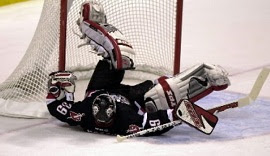
April 14, 1984 - Disappointed by the fading prominence of the local Czechoslovakian breakdancing scene, a teenaged Hasek asks his guidance counselor if there are any other careers where he can spend all his time randomly spinning around on his back for no reason.

August 7, 1992 – The Blackhawks trade Hasek to the Sabres for Stephane Beauregard, reasoning that they couldn't turn down the chance to acquire a player so good that he was once actually traded for future Hall-of-Famer Dominik Hasek.

February 11, 1995 – In yet another example of the sort of unbelievable rumors that can plague professional athletes, Hasek hears a crazy story that somebody somewhere may have come up with a new goalie mask design since 1983.


Saturday, June 2, 2012

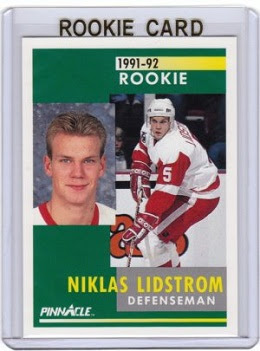
A brief history of Nicklas Lidstrom

SEE? I'm not the only one who can't spell it!
The NHL said goodbye to one of the greatest players in recent history on Thursday when Detroit captain Nicklas Lidstrom officially announced his retirement. While the announcement wasn't a surprise, it was still a difficult moment for fans who'd become used to seeing him patrol the Red Wings blueline over the past 20 seasons.

Most hockey fans can recite the numbers by now: Lidstrom won seven Norris Trophies, was a first-team all-star ten times, and won four Stanley Cups. But perhaps just as impressive, he leaves the game as one of the most-respected players of his generation. Even in this cynical age, it seems as if nobody in the hockey world has a bad word to say about the classy superstar.

Here's a look back at the NHL career of Nicklas Lidstrom.

June 17, 1989 - The Red Wings select Lidstrom with the 53rd overall pick at a draft which is perhaps best remembered for the major traffic jam that apparently caused every team in the league to miss the first 52 picks.

October 3, 1991 - Lidstrom is a team-leading +2 in his NHL debut against the Chicago Blackhawks, who immediately vow to only let him dominate them like that maybe 150 more times, max.

January 20, 1996 - A 25-year-old Lidstrom makes his NHL all-star game debut, then celebrates with fellow young all-stars Teemu Selanne and Jaromir Jagr by taking a few swigs of that weird bubbling elixir offered to them by a cackling Chris Chelios.

November 3, 1999 - A bored Lidstrom makes a bad decision in the defensive zone, just to see what it's like.