Thursday, March 31, 2016

What if we voted for the Hart Trophy the way we do the Jack Adams?

On the surface, the Jack Adams Award is straightforward enough. Voted on by broadcasters, the honour goes to the league’s best coach, or more specifically the one “adjudged to have contributed the most to his team’s success”. Pretty simple, right?

But over the years, it’s become clear that the Jack Adams is given out based on a very different set of standards than the ones applied to virtually every other league award.

Voters rarely honour guys like Mike Babcock or Joel Quenneville who are consistently good year in and year out, instead preferring candidates who’ve seen their teams make unexpected jumps in the standings. While other award voters tend to like to see winners who’ve “paid their dues” before being honoured, the Jack Adams often goes to coaches who have just stepped into new jobs, even including rookies making their NHL debuts.

And while other awards can be dominated by the same guys year in and year out (see Wayne Gretzky, Nicklas Lidstrom or Martin Brodeur), the Jack Adams almost never goes to a repeat winner – just one coach has won multiple times for the same team, and only one has won more than twice overall.

None of that is to say that the criteria used to select the Jack Adams is wrong. It's just very different. Which leads to a fun thought experiment: What if we voted for the other awards the way the broadcasters vote for the Jack Adams?

Let's find out. We're going to go back over the last 25 years of Hart Trophy winners as league MVP and re-award them based on that weird Jack Adams criteria. That means:

- We'll give a strong preference to guys who have recently joined teams (including rookies)

- We'll almost always insist on rewarding candidates whose team made a major leap in the standings

- We'll try really hard to avoid repeat winners, especially for the same team

Will this tell us anything useful? Honestly, no, not a thing. But will it give us something to argue about for a day or two? Only one way to find out. Going back 25 seasons takes us to 1990-91, so let's start there.

1990-91

Real winner: Brett Hull, who scored 86 goals for the Blues.

Our winner: Hull's a strong candidate, pushing the Blues to a 22-point jump in the standings in his third full season with the club. But in our Jack Adams-inspired universe, he loses out in a close vote to a newcomer: rookie Eddie Belfour, whose first season in Chicago sees the Blackhawks make a big jump of their own.

1991-92

Real winner: Mark Messier, winning his second Hart in three years.

Our winner: In real life, Messier won handily. But our Jack Adams-inspired voters probably would have made him even more of a landslide, after he joined the Rangers days into the season and immediately helped turn them into a Presidents' Trophy winner. Even with one previous win under his belt (for the Oilers in 1990), voters would make him a shoo-in.

1992-93

Real winner: Mario Lemieux, who ran away with the scoring title despite missing a chunk of the season battling cancer.

Our winner: Man, it's awfully tough to take the trophy from Lemieux, whose comeback was one of the most inspiring stories in sports history. But he'd already won the award, and his Penguins were back-to-back Cup champions at this point, so our voters are going to look elsewhere. It's a tough vote, with Boston's Adam Oates and Winnipeg super-rookie Teemu Selanne making for a stacked field. But our winner is Doug Gilmour, who turned the Leafs from utter laughingstock to Cup contender in his first full season in Toronto.

>> Read the full post at Sportsnet


Wednesday, March 30, 2016

When first overall busts are traded

News broke this week that Nail Yakupov has asked the Oilers to trade him. That’s probably not devastating news for Edmonton fans, most of whom have soured on the unproductive winger. Four years after being taken with the first overall pick in the 2012 draft, there’s little question that Yakupov is dangerously close to settling into bust territory.

But there’s good news for the Oilers. Trading a disappointing first overall pick is far from unprecedented. And in fact, history tells us that it’s even possible to extract some value from the deal. So let’s look back on five times in NHL history that a first overall bust was dealt a few years into their career, how those trades worked out, and what lessons the Oilers might be able to learn from them.

Brian Lawton, Minnesota North Stars

The bust: In 1983, the North Stars made Lawton the first ever American to be taken with the top pick. Among the players they passed on were another American, Pat LaFontaine, as well as a pair of decent Canadians in Steve Yzerman and Cam Neely. Lawton managed just one 20-goal season with the Stars, and never topped 50 points.

The trade: Days into the 1988-89 season, the Stars sent Lawton, Igor Liba and prospect Rick Bennett to the Rangers for Mark Tinordi, Paul Jerrard, Mike Sullivan, Bret Barnett and a third round choice.

The aftermath: Lawton didn’t last long in New York, appearing in just 30 games before he was on the move again, although in fairness that was five games more than Liba and Bennett would have in New York combined. In December, the Rangers packaged him with Don Maloney and Norm MacIver and sent him to the Whalers for Carey Wilson and a draft pick. (Ironically, the Whalers had owned the second pick in that 1983 draft, and had also passed on those future Hall of Famers, opting for a quasi-bust of their own in Sylvain Turgeon.)

Lawton bounced around with four more teams before his NHL career ended in 1993; he’d go on to become a player agent, and also had a stint as the Lightning GM.

While the pick was a painful miss for the North Stars, the Lawton trade worked out fairly well. Jerrard, Sullivan and Barnett combined for just five games in Minnesota, but Tinordi filled a regular role on the blueline until the franchise moved to Dallas in 1993. He went on to have a son who was so good that Maloney himself would trade away an all-star captain just to acquire him.

Lesson for the Oilers: While missing on a first overall pick is never fun, it is possible to salvage at least some value out of the eventual trade – assuming you move fast enough.

>> Read the full post at The Hockey News


Monday, March 28, 2016

Weekend report: The Pacific's big three

Faceoff: Pumping the Shark

Last week, I wrote about the top to (almost) bottom dominance of the Central Division, with a focus on the division's Big Three of Chicago, St. Louis and Dallas. Among the responses to that post came a pushback that would have seemed unthinkable just a few months ago: Hey, what about the Pacific?

Now to be clear, nobody is arguing that the Pacific has any sort of claim on the "best division" status—it may even be the worst, given how awful its bottom four teams are. But some readers wanted to know if its top three of the Kings, Ducks and Sharks are right up there with the Central's—and maybe even better?

The short answer: Huh. Yeah, they just might be.

The long answer starts over the Christmas holidays, when the division looked like a trainwreck. The Kings were good—so good, in fact, that they'd all but been handed the division crown. The second-place Sharks were fine, but were just one point up on Colorado, the Central's sixth-best team. The Canucks, Flames, Coyotes and Oilers were all scraping along, each losing more than they'd won. And all the way at the bottom of the conference sat the Ducks, the unmitigated disaster of the season's first half.

We already know what happened with Anaheim, whose refusal to panic and serve up the head of coach Bruce Boudreau paid off with a second-half surge back into the league's top tier. That changed the tone of the division, even as the four bad teams continued to plummet. By early March, the Ducks had pulled even with Los Angeles atop the division, and that seemed to light a fire under the Kings, who spent most of March heating up enough to regain the lead.

So sure, the Kings look great, as they almost always have during the Darryl Sutter era. And for the past few months, the Ducks have been just as good or better. We know all that. But the interesting team here is San Jose.

By now, the Sharks' narrative is well-established. They were a great team for a long time, but just couldn't get it done in the playoffs. Everyone has their theories as to why that was. Character? Heart? Joe Thornton, somehow, even though he's their best player? Or maybe just a good team whose only real flaw was that it didn't get the bounces at the right time. Whatever it was, everyone could agree that the Sharks' window had slammed shut with their 2014 collapse against the Kings followed by last year's playoff miss.

Well, almost everyone—GM Doug Wilson never seemed quite sure whether or not he was rebuilding. The team wanted to trade Thornton and Patrick Marleau, but didn't. Wilson said the rebuild was on, then kept bringing in veterans. You never really knew what to expect from these new-but-old Sharks, except that their days among the league's elite were done.

As the Sharks are proving, the Thornton/Marleau era isn't done just yet. –Photo by Neville E. Guard-USA TODAY Sports

But so far this year, they're... well, we're still not quite sure what they are. They've lost three straight, leaving them sitting third in the Pacific at 41-28-6, four points back of the Ducks and seven behind the Kings. That's still good enough to have them hovering right around the league's top ten overall, in a log jam with other good-but-not-great teams like the Islanders and Bruins. But if you prefer your numbers to come in the fancy stats variety, the Sharks start to look very good. And the rest of the league seems to be warming up to their chances; there's been a decided increase in "don't sleep on the Sharks" chatter lately.

But the biggest question still looms: Can they beat one of their California rivals in round one? And can they do it with enough left in the tank to beat the other one in round two? They'll probably have to in order to reach the conference final. And this is where all those past playoff ghosts start to haunt the conversation again, because the Sharks have never been the team you want to pick to exceed postseason expectations.

But maybe that's the whole point. We've always expected too much of the Sharks. What better way for the Thornton/Marleau era to end than to go into the playoffs as a clear underdog for the first time in over a decade, and shock the world?

Or maybe not. Either way, the top three in the Pacific can look scary good. And yes, maybe even Central-scary good.

Race to the Cup

The five teams with the best shot at winning the Stanley Cup.

5. Chicago Blackhawks (44-25-7, +25 true goals differential)Every time I say nice things about the Blackhawks, smart hockey people want to whisper in my ear that this year's team isn't as good as we all think it is. Just thought I'd get that on the record. And while we're at it, Corey Crawford is no sure thing to be back in time for the playoffs.

>> Read the full post at Vice Sports


Friday, March 25, 2016

Grab bag: The Norris debate

In the Friday grab bag:
- The Doughty vs. Karlsson debate
- Great moments in obscure NHL players randomly showing up in rap videos
- Don Cherry gets political
- The week's three comedy stars
- and we go way, way back for a look at the moment Jaromir Jagr became an NHLer

>> Read the full post at Vice Sports


Thursday, March 24, 2016

Let's shake up the expansion draft

Last week’s GM meetings brought plenty of talk about expansion, with the league presenting an early plan for what an expansion draft might look like. If and when we do get a draft, it will be the first one the league has held since 2000, and the NHL’s new plan looks an awful lot like what we had back then.

Let’s take a moment to remember what the NHL was like in 2000. There was no salary cap. Games could end in a tie, but not a shootout, and the standings had four columns. Gary Bettman only had one lockout under his belt. The Thrashers were in Atlanta, the Jets were on hiatus, and the Anaheim Ducks were still Mighty. The Los Angeles Kings, Boston Bruins and Chicago Blackhawks were all suffering through long Stanley Cup droughts, as was Ray Bourque. Sidney Crosby was weeks away from becoming a teenager, Connor McDavid hadn’t started kindergarten yet, and Jaromir Jagr was merely old.

All of which is to say that the NHL of 2000 has little to do with the today’s league. So why should our next expansion draft be based on what was done back then? Many of today’s fans don’t even remember how teams like the Columbus Blue Jackets, Minnesota Wild or Nashville Predators came into existence, so there’s no reason to feel bound by tradition.

No, it's time for the NHL to get creative. And we've got some idea to help them out. Here are three big new wrinkles the NHL should throw into their expansion draft plans.

Retained salary for exposed players

This will be the first expansion draft in the salary cap era, which will no doubt cause a major shift in strategy. The league is already looking at the possibility of forcing teams to expose a certain percentage of their salary cap, and there's been talk of changing the cap and floor requirements for the new teams in their inaugural seasons.

But the reality is that it's not hard to see what's going to happen here: The established teams are going to be exposing a ton of players with terrible contracts. And they'll be praying that those players will get picked, clearing the bad deals off the books. That's fine. It will probably even spur some fun trades, with teams sending assets to expansion newcomers in exchange for a promise to take a terrible contract off their hands.

But what if we went a step further? We already allow teams to retain salary in trades. Let's do the same for the expansion draft.

Here's how it would work. As each team submits their protected list, they'd have the option of also offering to retain salary on any player made available. You list the player, then you list the salary you're offering him at – knowing that you'd be responsible making up for the difference, in both cap hit and real dollars. And to really make it fun, we're not even going to the limit retained salary to 50 per cent. Sky's the limit, gentlemen.

You'd be adding a whole new element of strategy, for both the old and new teams. We know that nobody in their right mind is taking David Clarkson's $5.25 million albatross of a contract off of the Blue Jackets' hands, at least not without a first round pick or two attached to it. But what if he was on the list at $2 million? Wouldn't the Las Vegas Aces be awfully tempted to take a 32-year-old Dion Phaneuf at, say, $4.5 million, with the Senators paying the rest? Wouldn't they have to think about making Dustin Brown their first captain if the Kings were offering to eat half of his deal?

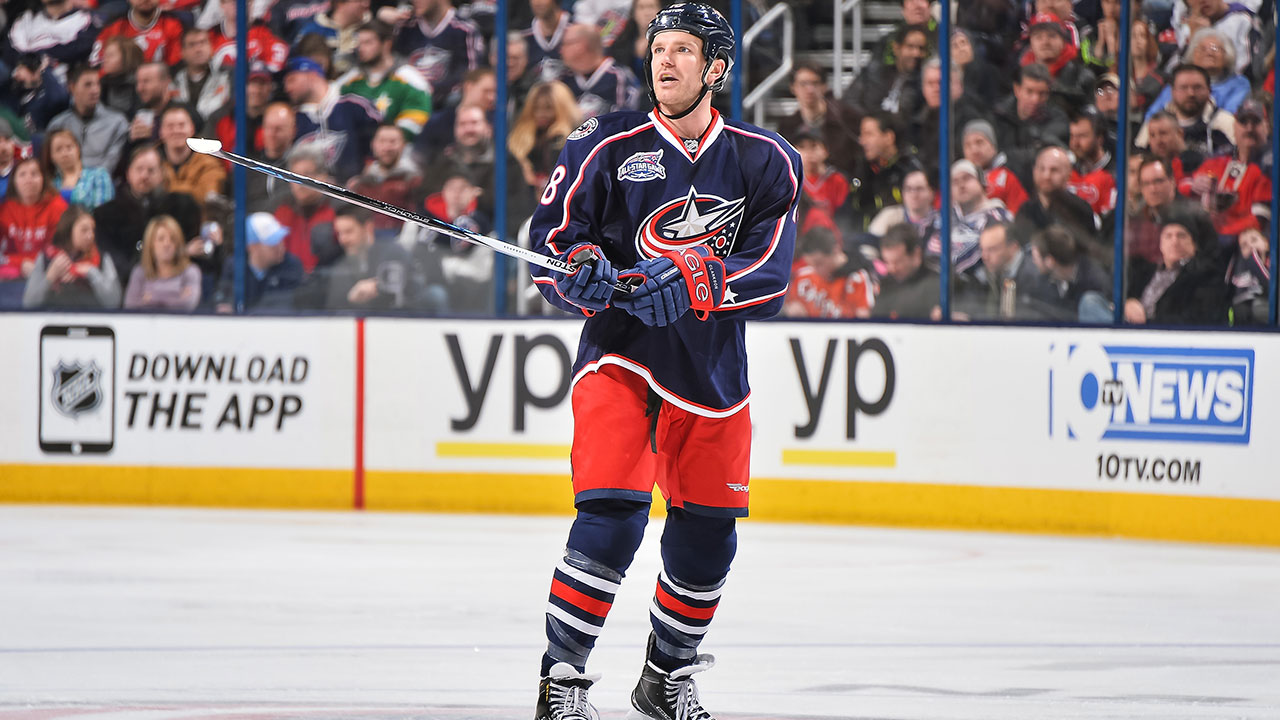
width="100%" Would a team be interested in taking David Clarkson at a reduced salary? (Jamie Sabau/Getty)

This isn't all that much different than what we have now in terms of trades, but the wrinkle is that teams aren't hammering out the retained salary as part of a specific negotiation with another team. Instead, everyone would have to come up with their numbers in advance. So how far do you go? How much it too much? How big of a discount sticker are you willing to slap on your worst deals to try to tempt an expansion team to take the bait?

There's only one way to find out. Many of these GMs signed those awful deals, so let's see how far they'll go to unload them.

>> Read the full post at Sportsnet